
Amir Otto · 26 October 2026
Advancements in Timber Processing Technologies Allow UK Mills to Reduce Waste Despite Rising Climate Risks to Surrounding Forests
UK sawmills have adopted new processing methods that trim material loss during conversion of logs into lumber, and these changes come at a time when forests across Britain encounter increased threats from shifting weather patterns and pest outbreaks. Data compiled through October 2026 shows measurable drops in wood waste at several facilities, while reports document rising incidents of storm damage and drought stress in plantation areas.
Processing Innovations Drive Efficiency Gains
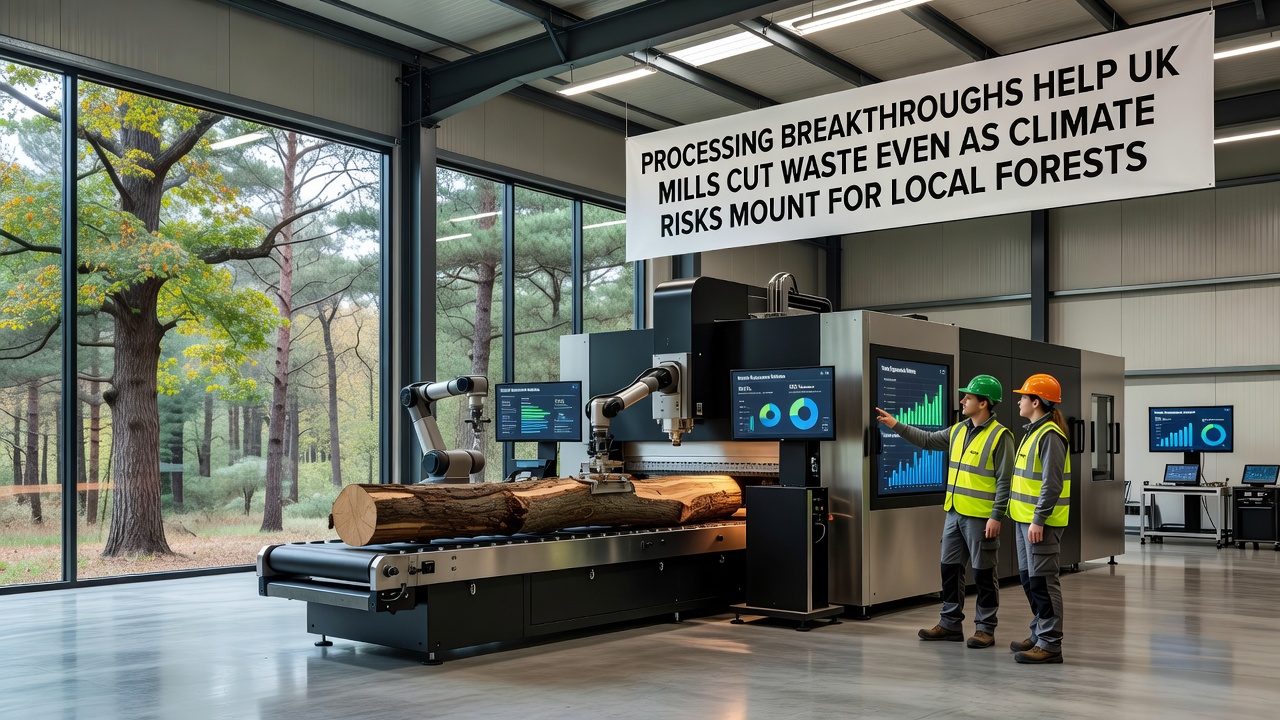
Equipment upgrades such as automated scanning systems and optimized saw blade configurations allow mills to extract higher volumes of usable timber from each log. Researchers at institutions studying forest products have noted that these tools adjust cuts in real time based on internal wood defects detected through sensors, and this approach reduces offcuts that previously went to lower-value uses or disposal. Mills in England and Wales report waste reductions ranging from 12 to 18 percent compared with figures from five years earlier, according to industry tracking by the Confederation of Timber Industries.
One facility in the Midlands installed laser-guided edgers last year that align cuts more precisely along grain lines, and operators there observed a drop in reject boards from 9 percent to just over 4 percent within six months of implementation. Similar installations in Scotland have followed, with operators citing faster throughput alongside the waste savings. These systems integrate with existing kilns and planers, which means facilities avoid full line replacements while still achieving gains in material recovery.
Climate Pressures on UK Woodlands Intensify
Forests supplying these mills face mounting challenges from prolonged dry spells and stronger winter storms, conditions that have become more frequent according to records maintained by the UK Met Office. In northern England, spruce stands showed elevated levels of windthrow during the 2025-2026 winter season, and analysts link the pattern to warmer, wetter soils that weaken root anchorage. Bark beetle populations have expanded their range northward as milder winters allow more generations per year, and affected trees exhibit reduced structural quality that further complicates milling.
Plantation managers in Wales have adjusted thinning schedules to remove vulnerable stems earlier, and this practice aims to limit the spread of pests while maintaining overall stand health. Data collected by Forest Research indicates that such interventions can preserve volume in the remaining crop, yet they also alter the size mix of logs delivered to mills. Smaller diameter material requires different processing setups, and facilities that invested in flexible scanning technology handle these changes with less additional waste.
Combined Effects on Supply Chains
Mills that cut waste through better processing maintain output levels even when log deliveries include more variable material from stressed forests. Supply chain records from 2026 reveal that several operations sustained or increased lumber production despite a 7 percent reduction in average log diameter from certain sourcing regions. The efficiency improvements offset some volume shortfalls, and this balance supports steady deliveries to construction and packaging sectors that rely on UK softwood.
Observers tracking timber flows note that reduced waste also lowers the volume of residues sent to biomass boilers or chipboard plants, which shifts the economics of residue markets. Facilities now sell fewer low-grade byproducts, and some have redirected savings toward investments in drying capacity that further improves grade recovery. These adjustments occur alongside ongoing monitoring of forest health, where agencies compile annual assessments of pest damage and storm impacts to guide future planting choices.
Regional Variations and Adaptation Steps
Northern Ireland plantations report different stress profiles than those in southern England, with wetter conditions favoring fungal issues over drought effects. Mills serving those areas have emphasized moisture control during initial breakdown, and this step prevents additional degrade that would otherwise increase waste. Across the UK, grant programs support both mill upgrades and forest resilience measures, creating parallel pathways that address processing efficiency and woodland stability.
Studies from university forestry departments have examined how sensor-based sorting at mills can flag logs from higher-risk stands for priority processing, and this sequencing reduces the chance that compromised material sits in storage and deteriorates further. Such practices integrate with broader efforts by timber growers to diversify species mixes, a response documented in regional forestry plans updated through 2026.
Conclusion
Processing advancements continue to help UK mills extract more value from available logs, while climate-related pressures on forests prompt parallel adjustments in management and sourcing. Records through October 2026 illustrate measurable waste reductions alongside documented changes in forest conditions, and ongoing technology adoption positions mills to handle evolving log characteristics. These developments unfold within established supply networks that connect growers, processors, and end users across the country.