Greta Powell · 13 October 2026
From Forest to Frame: How Local Timber Choices Cut Emissions in British Construction Projects
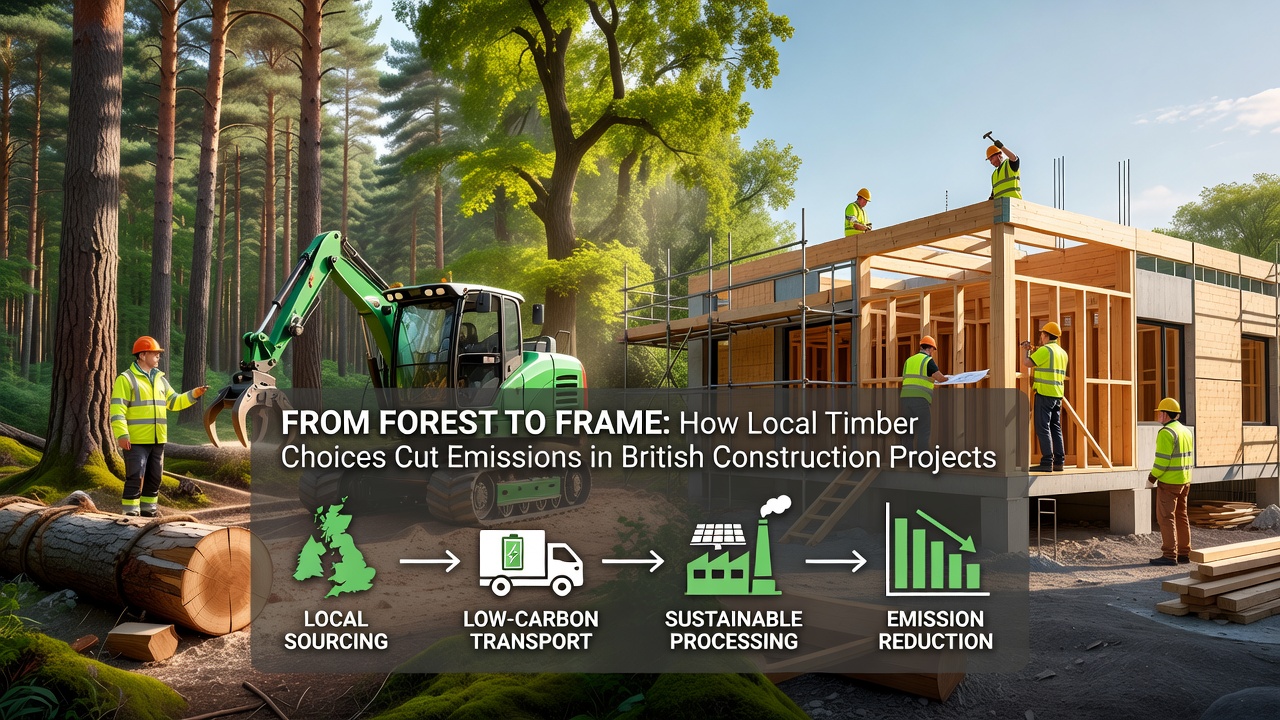
Local timber sourcing has gained traction across British construction sites because shorter transport distances reduce the carbon output tied to material delivery, while UK forests continue to store carbon through managed growth cycles. Data from industry monitoring shows that imported timber often travels thousands of kilometres from Baltic or North American ports, whereas domestic supplies move shorter distances from regional forests to nearby mills and then to building locations. This difference in logistics contributes directly to lower overall project emissions when builders select timber from British sources.
Transport Distances and Carbon Calculations
Studies compiled by UK forestry groups reveal that road and sea freight account for a measurable share of embodied carbon in construction materials, and switching to regional timber cuts those figures because fewer lorries and vessels operate over extended routes. Researchers tracking supply chains in 2025 and into October 2026 noted consistent patterns where projects using Scottish or Welsh softwood recorded transport-related emissions reductions compared with equivalent volumes shipped from overseas. Builders who integrate local species such as spruce and pine into framing and cladding therefore lower the transport component of their carbon accounting without altering structural specifications.
Forest Management and Carbon Storage
British woodlands under active management maintain steady carbon sequestration rates while supplying construction-grade timber, and certification schemes verify that harvesting stays within sustainable yield limits. Government forestry statistics indicate that new planting and restocking programmes have expanded the available softwood resource in recent years, which supports increased domestic supply volumes. When construction firms choose these materials, the carbon already locked in the wood remains sequestered for the building's lifespan, and replacement trees continue the cycle of uptake from the atmosphere.
Project Examples Across Regions
One housing development in the Midlands incorporated locally milled timber for floor joists and roof trusses, and project records showed the material originated from forests within a 150-kilometre radius. Similar approaches appear in commercial builds in northern England where contractors tracked material origins through chain-of-custody documentation. Observers note that these choices align with broader net-zero targets because the cumulative effect across multiple sites adds up in national emissions inventories. Data released in late 2026 highlighted several public-sector projects that met or exceeded their embodied-carbon thresholds partly through timber sourcing decisions made at the tender stage.
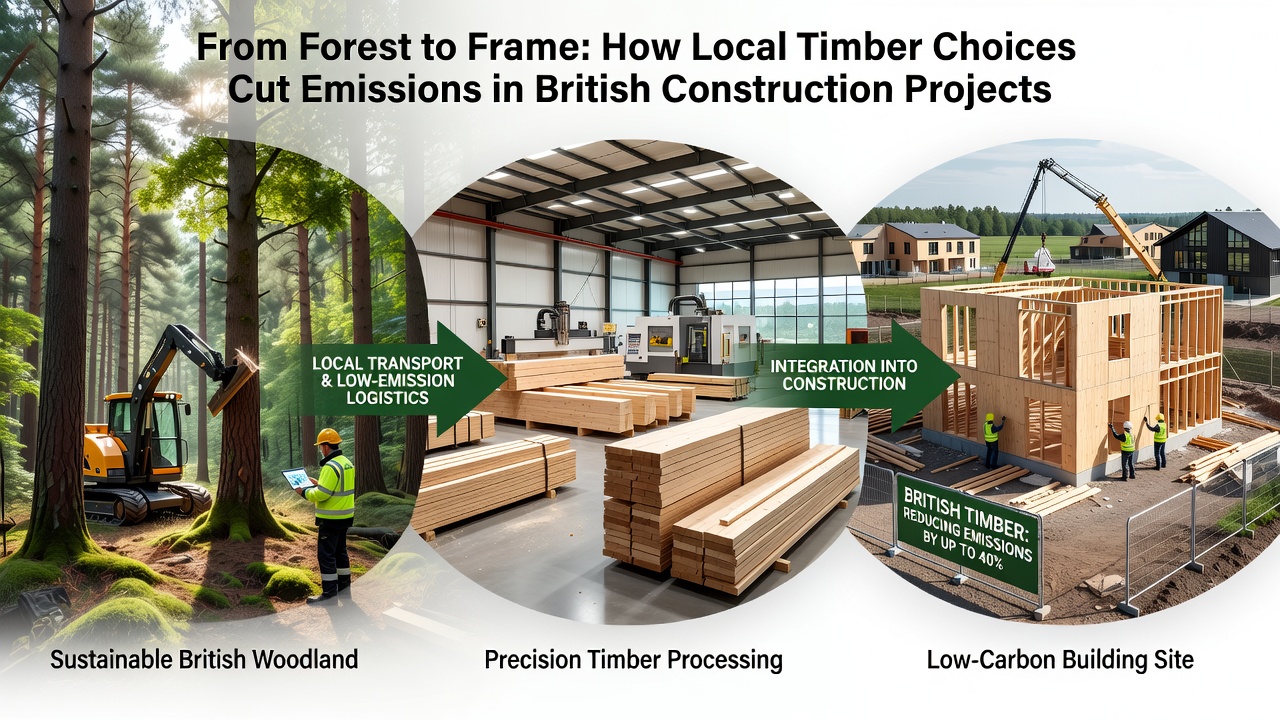
Engineers working on these sites report that strength grading and moisture content checks remain consistent whether the timber is local or imported, so performance standards do not change. This consistency allows specification teams to focus on origin as a variable for emissions tracking rather than structural performance.
Market and Policy Influences
Procurement guidelines issued by public bodies increasingly reference regional material preferences, and private developers have followed suit when calculating whole-life carbon for planning submissions. Trade data compiled by industry associations show rising volumes of British softwood reaching construction merchants, driven by both availability and the measurable emissions advantage. Those monitoring the sector point to collaboration between sawmills and architects that has produced standard details optimised for domestic species profiles, which further streamlines adoption on site.
International comparisons from bodies such as the UNECE forestry programme place the UK experience alongside similar shifts in other timber-producing nations, where reduced haul distances correlate with lower reported emissions per cubic metre delivered. Meanwhile, reports from the Food and Agriculture Organization document how managed forests worldwide contribute to construction decarbonisation when supply chains stay shorter. British projects fit within this global pattern because the same principles of proximity and verified sustainable yield apply.
Conclusion
Local timber selection in British construction projects connects forest management practices with measurable reductions in transport emissions and sustained carbon storage in finished buildings. Records from multiple regions demonstrate that shorter supply routes and continued woodland productivity together support lower project footprints while meeting established building standards. As more sites adopt origin tracking and procurement policies reflect these factors, the role of domestic timber continues to feature in emissions reporting for the sector.