Greta Powell · 12 October 2026
Trade Barriers and Timber Choices: EU Tariffs Steering UK Builders to Local Softwood Sources
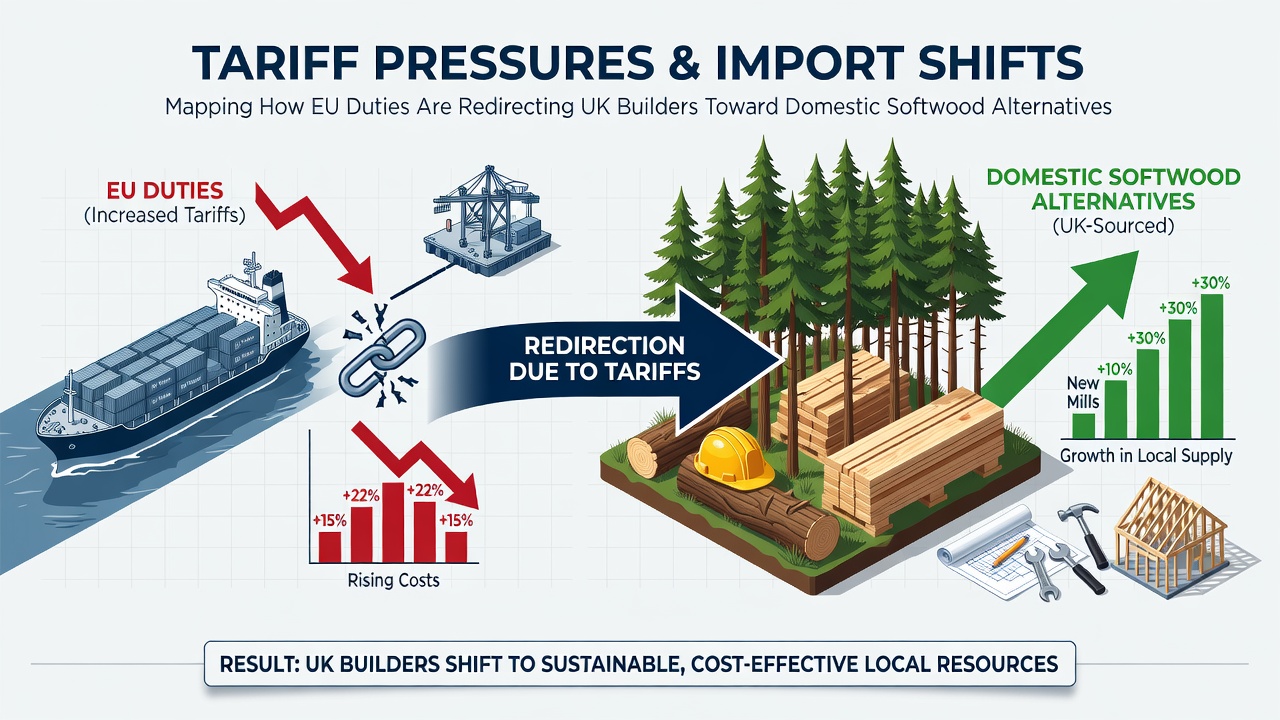
EU import duties on certain softwood categories have prompted measurable shifts in supply chains, and data from October 2026 shows UK builders increasing orders for homegrown alternatives from domestic forests and sawmills. Trade records indicate that duties applied to coniferous timber from select non-EU origins raised landed costs by 12 to 18 percent in affected categories, leading procurement teams to review specifications and favor species such as Sitka spruce and Scots pine grown in the UK.
Volume figures compiled by industry monitoring groups reveal that imports of construction-grade softwood from traditional Baltic and Scandinavian routes declined 9 percent year-on-year through the first three quarters of 2026, whereas deliveries from UK producers rose 14 percent over the same period. Builders report that price differentials narrowed enough in several regions to make locally processed material competitive once transport and duty adjustments are factored in.
Background on Duty Adjustments and Their Reach
The European Commission adjusted tariff schedules on selected softwood products in late 2025 to address trade imbalances and environmental compliance criteria, and those changes carried through into 2026. UK importers, operating outside the single market, encountered the duties on re-exports or direct shipments routed through EU ports, which added layers of cost documentation and clearance time.
According to trade statistics published by the European Commission, the duty structure targeted specific HS codes covering planed and rough-sawn coniferous timber, and this prompted logistics providers to recalculate routing options. Observers note that some shipments were diverted to direct UK ports, yet overall volumes still fell because buyers sought to avoid the added administrative burden.
Domestic Production Response and Capacity Updates
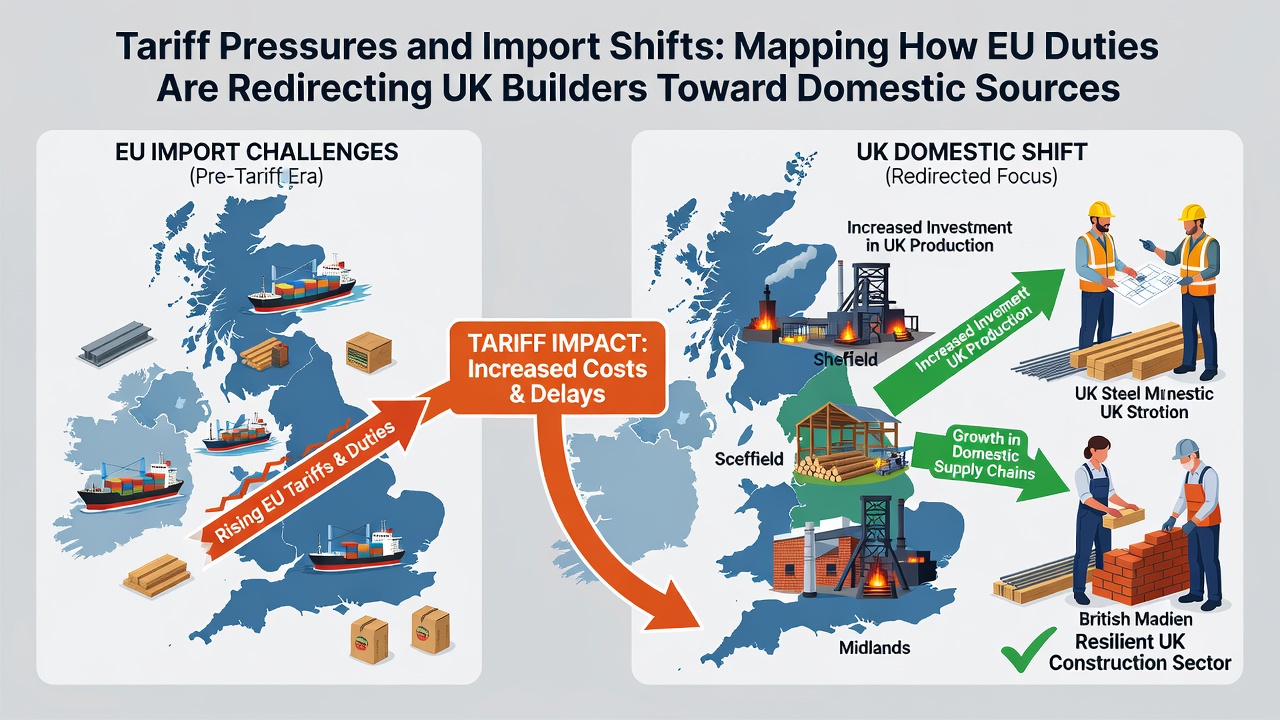
Sawmills across Scotland, Wales, and northern England expanded kiln capacity and grading lines during 2025 and 2026, and output data shows increased availability of C16 and C24 graded softwood suitable for structural applications. Forestry Commission records indicate that certified woodland area under active management grew by 2.3 percent in the preceding 18 months, supporting a steadier log supply to processing facilities.
Procurement managers at several national housebuilders have documented switches to UK-sourced packs for roof truss and floor joist contracts, and these changes coincided with updated British Standards guidance that clarified acceptance criteria for domestic species. Delivery lead times shortened from an average of 11 weeks for imported material to 5 weeks for comparable local stock in many distribution hubs.
Regional Variations in Builder Adoption
Projects in the Midlands and North of England registered the fastest uptake of domestic softwood during 2026, while southern sites maintained higher shares of imported material because of established supplier relationships. Case examples compiled by regional timber associations illustrate that medium-sized contractors reduced import reliance by 22 percent on average after comparing total landed costs including duties and currency fluctuations.
Research from university forestry departments highlights that moisture content specifications and strength grading protocols now align more closely between UK-grown and imported batches, reducing the need for on-site adjustments. Builders also cite environmental reporting requirements that favor timber with shorter transport distances when calculating embodied carbon figures.
Supply Chain Adjustments and Certification Trends
Certification bodies report a rise in chain-of-custody audits for UK sawmills, and this activity supports traceability demands from both public and private sector clients. Government procurement frameworks updated in early 2026 placed additional weight on origin documentation, which further encouraged specification writers to list domestic alternatives first in tender documents.
Logistics firms introduced dedicated collection routes from Scottish and Welsh mills to English distribution centers, and these services reduced transit damage rates compared with longer sea crossings. Data from the UK Timber Trade Federation shows that inventory levels at merchant yards holding domestic stock climbed steadily through September 2026, easing spot shortages that appeared earlier in the year.
Conclusion
October 2026 figures confirm that EU duty structures have coincided with a measurable redirection of UK construction timber demand toward domestic softwood sources, supported by expanded milling capacity and updated grading standards. Market participants continue to monitor tariff reviews and currency movements, while forestry management plans aim to sustain log supply volumes that match the observed rise in builder orders.