Iris Neumann · 28 September 2026
Weather Patterns and Grant Incentives Guide Plantation Changes in Northern Ireland Forests
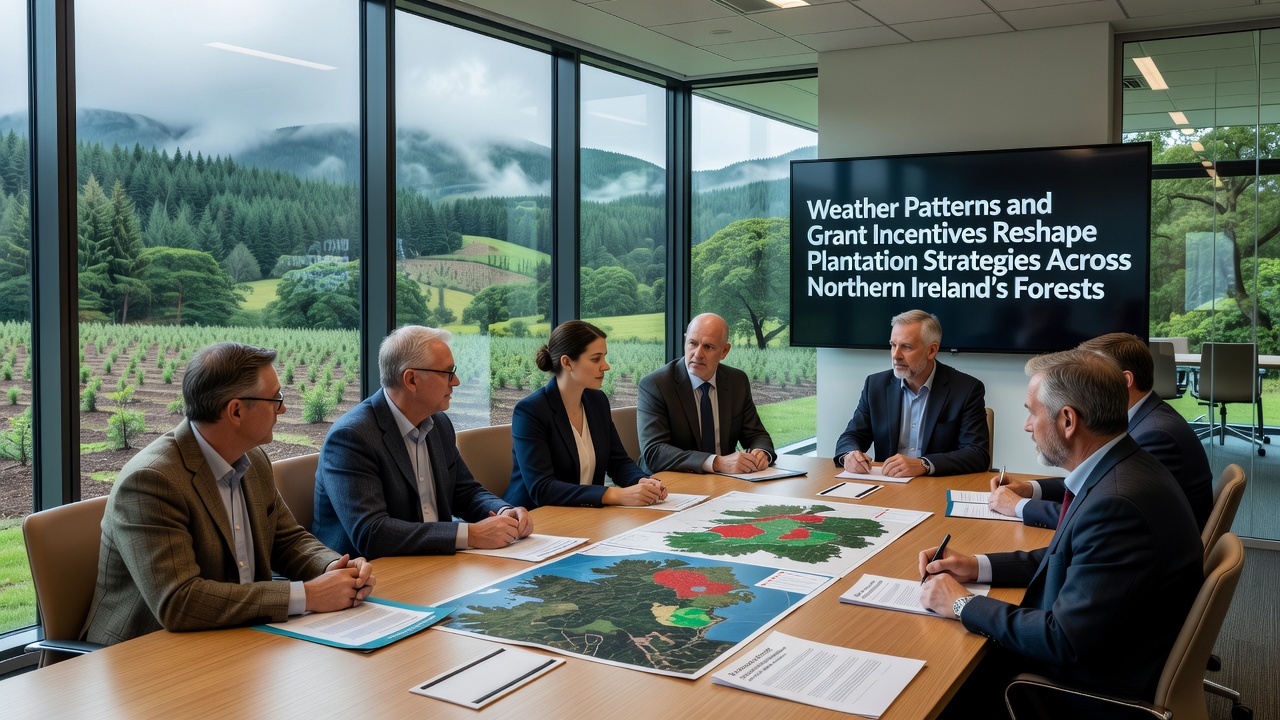
Northern Ireland's forest sector has responded to shifting rainfall distributions and temperature variations by adjusting species selection and planting schedules, while government grant programs have directed resources toward resilient woodland establishment. Data from the Forest Service of Northern Ireland indicate that average annual rainfall increased by 12 percent between 2015 and 2025 across key plantation zones in Counties Antrim and Tyrone, prompting managers to favor drainage-integrated sites and drought-tolerant provenances during establishment phases.
Observed Shifts in Regional Weather Data
Meteorological records compiled through 2026 show that storm frequency rose notably during autumn months, with wind events exceeding 50 knots occurring 18 percent more often than the 1990-2010 baseline. These patterns have altered soil conditions on upland sites, where waterlogging now persists longer into spring and delays traditional planting windows from February through April. Observers note that operators have moved operations to September and October slots on better-drained lowland areas to capitalize on firmer ground conditions before winter sets in.
Grant structures administered by the Department of Agriculture, Environment and Rural Affairs have incorporated weather-risk criteria since 2023, requiring applicants to demonstrate site-specific climate adaptation measures before funding approval. Payments now scale according to the proportion of native or climate-resilient stock used, with higher rates available for mixtures that include Sitka spruce alongside Douglas fir and western red cedar on exposed slopes.
Grant Structures and Species Selection Outcomes
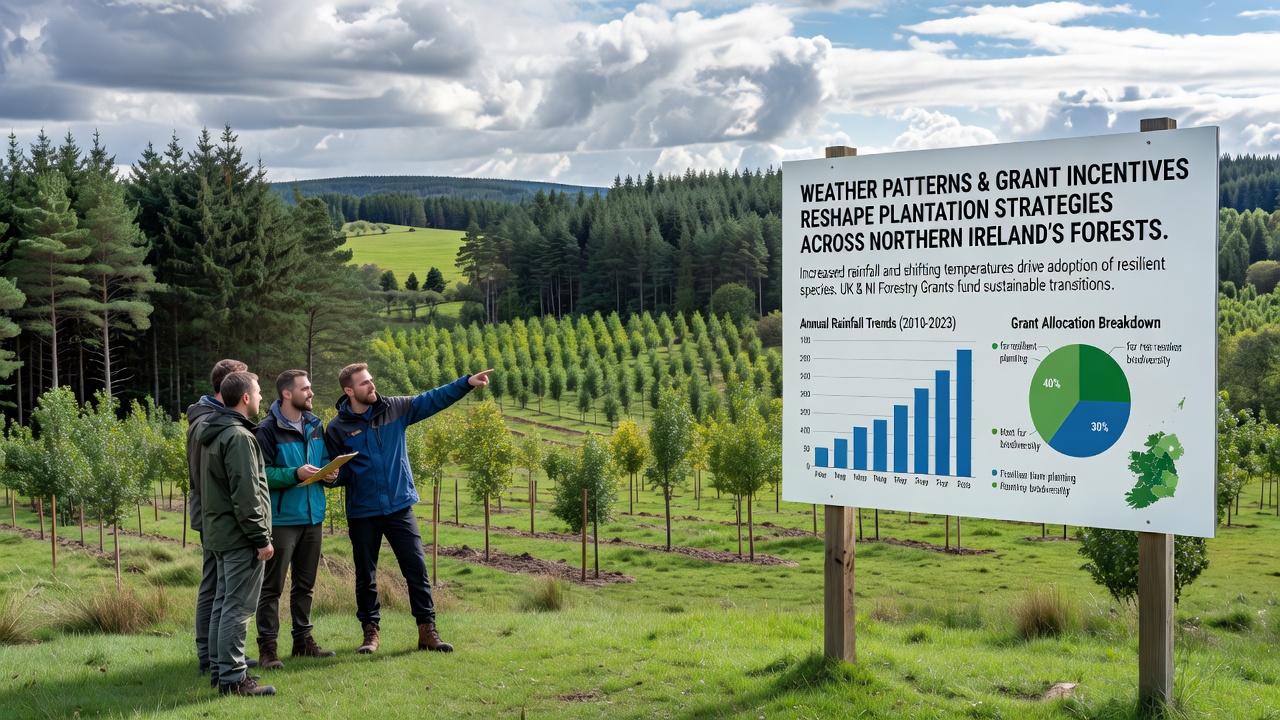
Figures released in September 2026 reveal that 2,450 hectares received grant support during the preceding financial year, a 9 percent increase over the 2024 total. Of this area, 62 percent incorporated at least three species, compared with 41 percent five years earlier. The shift aligns with updated eligibility rules that tie maximum payment rates to biodiversity and resilience scoring systems developed jointly by Forest Research and local agronomy teams.
One study from Teagasc documented survival rates above 85 percent on trial plots where grant-funded drainage improvements preceded planting, whereas untreated control areas experienced 23 percent higher mortality during the 2025 growing season. These results have encouraged wider adoption of pre-planting cultivation techniques that address both water management and root development under variable moisture regimes.
Operational Adjustments Across Estates
Estate managers in the Sperrin Mountains have reallocated planting resources toward sheltered valleys where windthrow risk remains lower, while maintaining grant compliance through targeted restocking on higher ground with nurse species. Records indicate that average plant density per hectare dropped from 2,800 to 2,350 stems as wider spacing combined with improved individual tree protection measures became standard practice under incentive guidelines.
Contractors report that mechanized planting equipment now operates on 34 percent more sites than in 2022 because grant conditions require documented soil assessments that identify suitable machinery access periods. This change has reduced manual labor requirements while maintaining establishment quality on sites previously considered marginal due to seasonal wetness.
Market and Supply Chain Implications
Timber supply forecasts prepared by industry analysts project that the current planting mix will yield a broader diameter distribution by 2045, supporting both sawlog and biomass markets. Because grant conditions favor continuous-cover elements on suitable sites, thinning operations are expected to begin earlier on some estates, smoothing future harvest volumes rather than concentrating them in single clearfell events.
Links between weather data and grant eligibility continue to evolve, with the latest guidance documents requiring applicants to reference downscaled climate projections for their specific elevation and aspect. These requirements draw on datasets maintained by the Met Office and regional environmental agencies to ensure planting decisions reflect documented trends rather than historical averages alone.
Conclusion
Northern Ireland's plantation strategies now integrate weather monitoring outputs directly into grant application processes, resulting in measurable changes to species composition, planting timing, and site preparation methods. Continued alignment between meteorological records and funding criteria will determine the scale of future adjustments as operators respond to both environmental conditions and available support mechanisms.